The Formula That Didn't Work..And the One That Finally Did!
I need to tell you about the mask that turned purple.
Not intentionally. Not as a fun party trick. Not because we thought Gen Z was secretly craving a skincare product that made them look like an eggplant. It just... happened. One minute the formula was a neutral cream. The next? Barney-core.
We called it the “color-changing mask” in early meetings because that sounded better than “the thing that unpredictably shifts hues and terrifies anyone under thirty.” The idea was that it would react to skin temperature and “activate” which, in theory, sounds cool. In practice? My daughter took one look and said, “Mummy, why is my face the same colour as my grape juice?”
That was Sample #7. Or maybe #8. Honestly, after a year of this, the numbers blur together like bad foundation.
The Year of “Fine”
Here’s what nobody tells you about building a skincare product: “fine” is the enemy.
Fine means it doesn’t offend anyone. Fine means it doesn’t excite anyone either. Fine means you keep it in a drawer and tell yourself you’ll “circle back” while secretly hoping it magically improves overnight like a skincare fairy visited your lab.
We had a lot of “fine” samples. Samples that cleansed adequately. Samples that moisturized sufficiently. Samples that did exactly what they promised on the label and absolutely nothing more.
They were the equivalent of a C+ student passing, but never making the honor roll.
And we kept testing. Because fine isn’t Smoosh.
Sample #12 smelled like a swimming pool. Sample #15 felt like paste. Sample #22 separated after three days like a bad relationship. Sample #31 made my daughter’s face “feel tight” her exact words, delivered with the brutal honesty only a child can muster. (She’s eight now. The critiques have only gotten more sophisticated.)
Each time, we’d tweak. Adjust the preservative ratio. Swap the texture agent. Change the pH by 0.2 and retest. It was like tuning a piano, except every key was a different ingredient and the song was “please just work.
The Purple Problem
But the color-changing mask? That was a special kind of failure.
The concept came from a well-meaning place. We wanted something interactive. Something that felt like an experience, not a chore. Something that said “this is doing something” in a world where Gen Z is skeptical of everything.
What we got was a product that turned lavender on some skin tones, grey on others, and full-on violet on my daughter’s best friend who, bless her, sat there patiently while we all stared in horror and then burst out laughing.
“Does it work though?” my husband asked, ever the pragmatist.
“It works at making her look like a Smurf,” I said. “That’s not the glow we’re going for.”
We shelved it. Not because it was dangerous, it was actually quite safe, which made the whole thing more annoying. We shelved it because it didn’t feel like Smoosh. It felt like a gimmick. And if there’s one thing I’ve learned from reading 47 ingredient lists on my kitchen floor, it’s that Gen Z can smell a gimmick from three aisles away.
Who We’re Actually Building For
Let me be clear about something: we’re not just building for “young skin.” We’re not just building for teenagers. We’re not building for people who need to be told what to do.
We’re building for Gen Z, ages 14 to 29 or anyone who want clean, effective skincare that respects their time, their intelligence, and their actual life.
That includes the 16-year-old who has to be at school by 7:30 AM. The 22-year-old who just started their first job and is too tired for a 12-step ritual. The 27-year-old who reads labels, asks questions, and is DONE with being told they need seven products to achieve what one could do.
Gen Z isn’t a monolith. They’re not all on TikTok. They’re not all obsessed with “glass skin.” They’re not all teenagers. Some are parents. Some are professionals. Some are still figuring it out. What they have in common is this: they refuse to let beauty become a part time job.
And that’s who we’re building for.
The 60-Second Standard
Somewhere around Sample #40, we stopped asking “does it work?” and started asking “does it feel like us?”
Because here’s the thing about building for Gen Z, they don’t just want results. They want an experience that matches their values. Their humour. Their refusal to take anything too seriously, including themselves. They want skincare that feels like their favourite creator, funny, honest, unexpectedly wise, and never boring.
We wanted something that took 60 seconds. Because Gen Z has better things to do than stand in front of a mirror performing a 12-step ritual that requires a PhD and a prayer. We wanted something that didn’t need rinsing. We wanted something that felt sensory and satisfying. Because if it feels like medicine, they won’t use it. And if they don’t use it, it doesn’t matter how “clean” it is.
We wanted something that worked on faces AND bodies. Because GCC heat doesn’t discriminate, bacne is real, arm texture is real, and “summer skin” is a whole category of its own, whether you’re 16 or 26.
And we wanted something that made us grin when we tested it. Not just nod approvingly. Grin.
The One That Made Us Grin
I can’t tell you exactly which sample number it was. The spreadsheet has it, but honestly, at that point I wasn’t counting anymore. I was just... feeling.
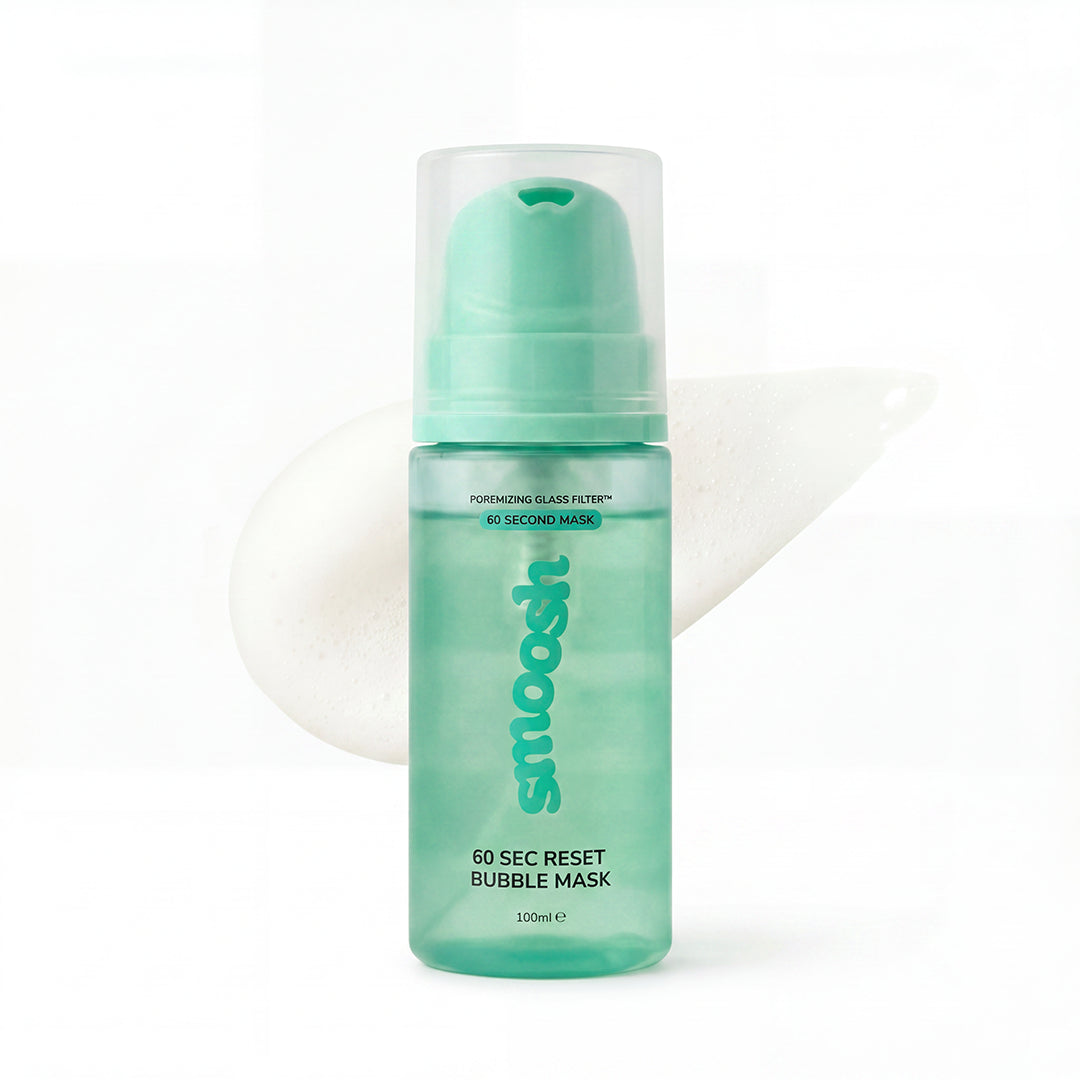
It was the one that bubbled. Not aggressively, we’re not building a science fair volcano. Gently. Playfully. Like the product was having a tiny party on your skin and you were invited.
It was the one that my daughter asked to use again. Unprompted. Without me bribing her.
It was the one that felt like a reset. Not a treatment. Not a routine. A reset. Sixty seconds, no rinse, done. Face, body, wherever the heat got you.
It was the one that survived the summerhouse test. The terrible lighting test. The “let’s see if this separates in a hot car” test. The “does it still work after being hand-carried through three airports” test.
It teaches you that “good enough” is the enemy of “actually good.” That every time you say “this is fine,” what you’re really saying is “I don’t believe my audience deserves better.”
It teaches you that your toughest critics aren’t on Twitter. They’re in your kitchen. They’re eight years old. They tell you your product smells like a swimming pool and their face feels tight, and you thank them because they’re right.
It teaches you that the product you launch isn’t the one that was easiest to make. It’s the one that was hardest to walk away from. The one you kept tweaking, adjusting, refusing to accept as “fine” until it finally made you grin.
We’re not launching in August because we hit a deadline. We’re launching in August because we finally found the one that feels like us. The one that respects Gen Z’s time, their skin, and their refusal to settle for anything less than grin worthy.
And let me tell you, after a year of purple masks, swimming pool smells, and separation anxiety (both the formula and mine)? That grin is very, very earned.
I Want to Hear From You
Have you ever stuck with something long after everyone else would have quit? Kept iterating, rejecting “fine,” holding out for the thing that actually makes you grin? Tell me in the comments. I’m collecting stories of stubborn perfectionists who know that good enough is never good enough.
I’m glad you’re here.
Aamna, Founder, Smoosh
It was the one that finally felt like Smoosh.
What a Year Teaches You
A year of samples teaches you that perfection isn’t a destination. It’s a decision to stop settling.